

MobileTrader
MobileTrader: trading platform near at hand!
Download and start right now!

 15.07.2026 09:55 AM
This review covers new turbulence and strategic shifts shaping the economic landscape. In June, China drastically reduced crude oil imports to the lowest level in almost ten years, driven by disrupted deliveries from the Persian Gulf, weak fuel demand and lower refinery throughput — developments that reverberate through global supply chains.
On Wall Street, an unexpected profit warning from IBM produced the company's biggest single-day drop in its 115-year history, jolting the entire tech sector and exposing risks from shifting corporate capital allocation.
At the same time, Intel announced a €5 billion investment in its Leixlip campus in Ireland, strengthening AI-chip production and localizing supply chains in Europe.
Finally, the battle for AI leadership is increasingly shifting to cost efficiency: vendors are rolling out models with higher token efficiency, and corporate customers are demanding lower usage costs for neural networks. This trend could reshape the competitive landscape in tech.

In June, Chinese crude imports plunged to a near-ten-year low — a result of supply disruptions from the Persian Gulf, weak fuel demand and reduced refinery runs. Customs data released Tuesday show Beijing imported 29.27 million tonnes of crude last month (about 7.12 million barrels per day), down 41.3% year-on-year — the lowest level since October 2016. Volumes fell another 12% from May, marking the fourth consecutive monthly decline.
Why such a collapse? Along with military risks around the Strait of Hormuz, deliveries became less reliable and high commodity prices undermined refinery margins, forcing processors to cut utilization to decade-low levels.
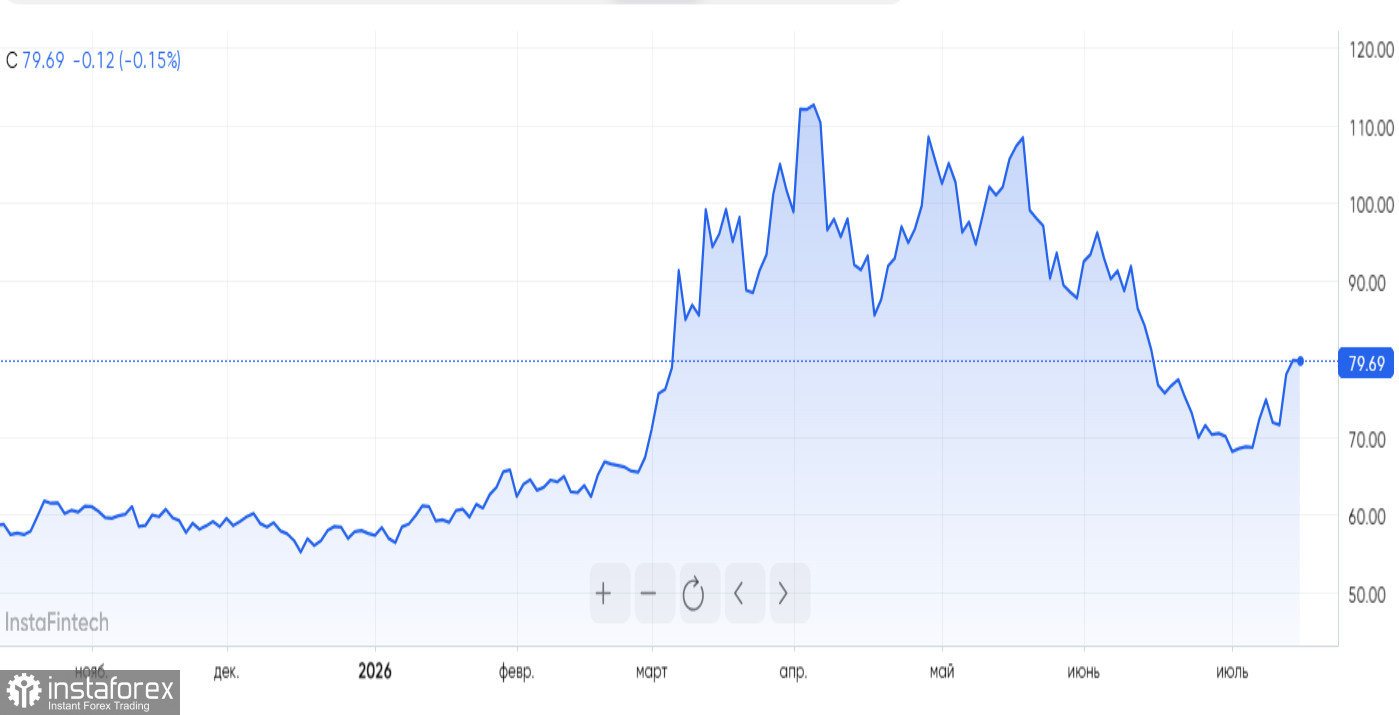
Bloomberg also noted that Beijing is not rushing to secure alternative suppliers. Export restrictions on petroleum products introduced to safeguard energy security have also cooled interest in crude purchases.
An interesting contrast: the drop in oil imports did not dent China's overall trade figures. The trade surplus in June rose to $125.62 billion (versus a $121 billion forecast), and exports remain strong thanks to demand for goods — including AI-related products — and favorable pricing. Reuters expects dollar-value exports to rise about 18.2% year-on-year.
The instruments discussed are tradable on the InstaForex platform. If you plan to trade them, consider opening an account with InstaForex and downloading the company's mobile app for quick market access.
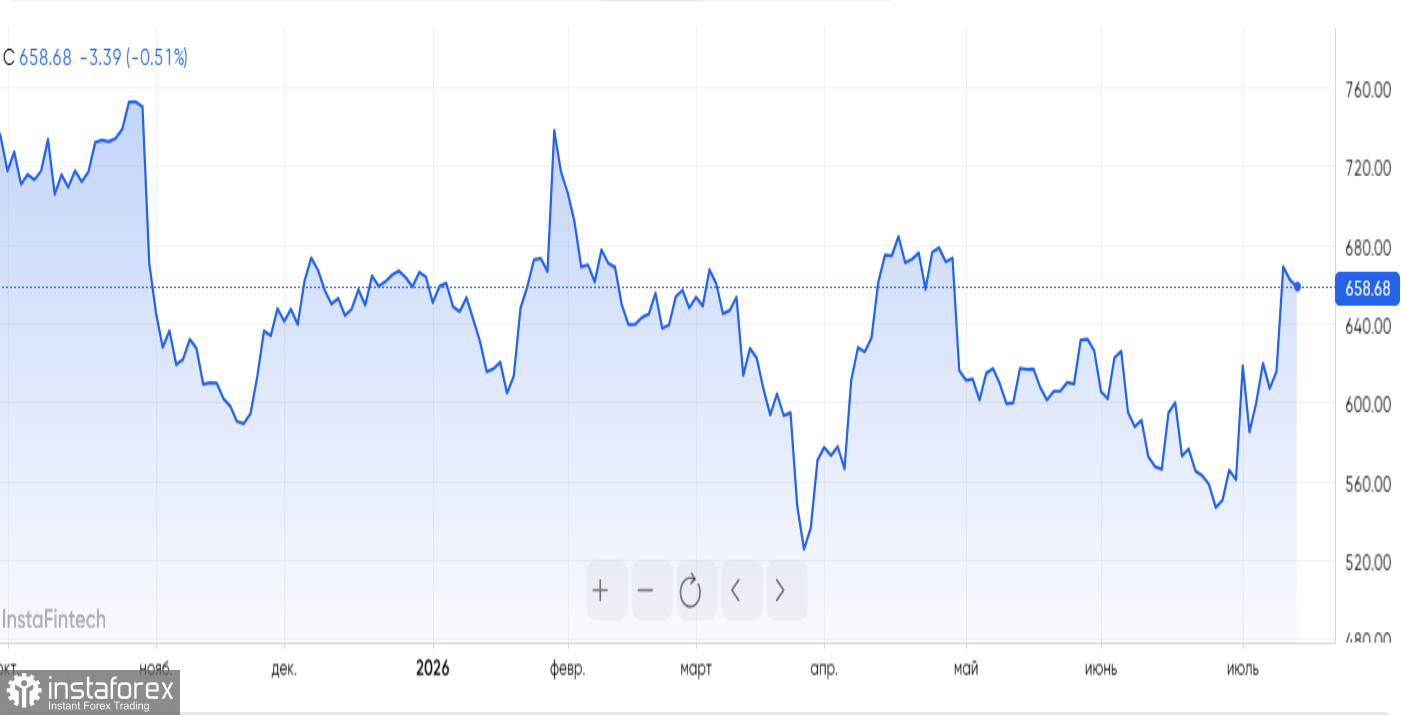
On Tuesday, IBM shares plunged after CEO Arvind Krishna sent investors a preliminary profit warning for Q2 — results that came in markedly below Wall Street expectations. This was the largest single?day drop in the company's 115-year history.
Preliminary adjusted figures showed EPS of $2.93 on revenue of $17.2 billion, versus analyst forecasts of $3.01 and $17.86 billion. During trading, the stock fell nearly 25%, wiping tens of billions off the company's market value.
In his investor letter, Krishna attributed the shortfall to an unexpected reallocation of client capital. He said that in recent weeks, customers shifted spending toward servers, storage systems and memory to lock in deliveries of scarce equipment amid the threat of tariffs and anticipated price rises. "We expected some impact from supply?chain disruptions, but not such a broad reallocation of capital," Krishna wrote.
Weaknesses were also concentrated in the IBM Z mainframe division and its related software stack, particularly transaction processing. Krishna noted that the z17 mainframe rollout performed better than any prior program in company history, but results still "fell short of expectations."
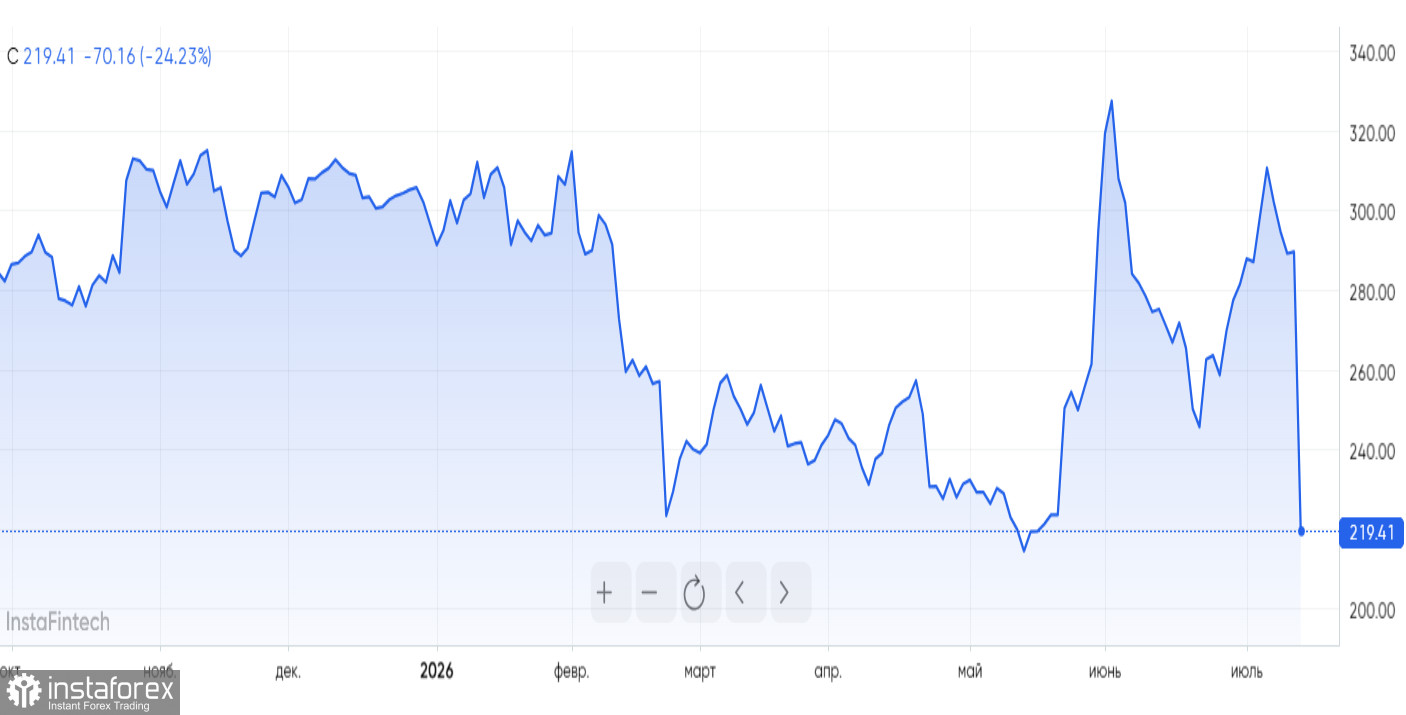
The sell-off rattled the whole tech sector. Fox Business reported declines in ServiceNow, Salesforce, Microsoft, Arm Holdings, Oracle and Apple following the news. Maria Bartiromo called the warning "a shockwave for the tech sector."
Cybersecurity stocks, by contrast, rose sharply: shares of CrowdStrike, Fortinet and other security vendors jumped after Krishna's comments highlighted sustained corporate demand in that segment.
HSBC analyst Abhishek Shukla downgraded IBM from Hold to Sell and cut the price target from $231 to $191. Meanwhile, Ademi LLP, a shareholder representation law firm, announced it has opened an investigation into possible securities fraud at IBM.
Full Q2 results and an updated outlook will be discussed on the company's earnings call scheduled for July 22.
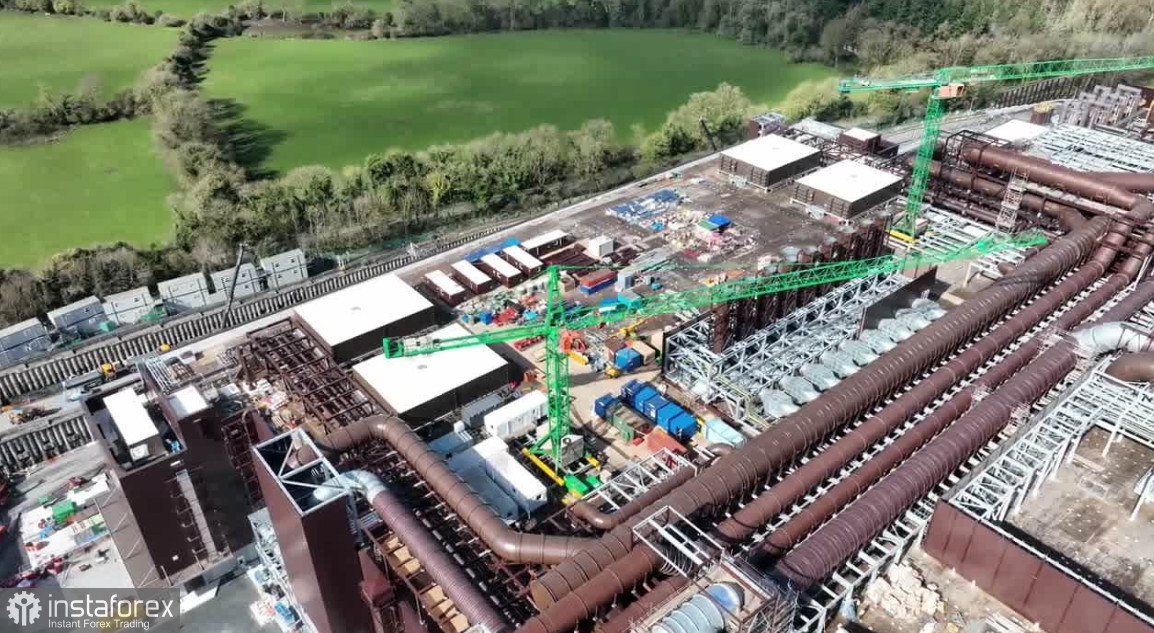
On Monday, Intel announced a new investment round: the company will spend €5 billion (about $5.7 billion) to modernize and expand its Leixlip campus in County Kildare, Ireland. Reuters reports the project began earlier this year and most of the funds are expected to be spent by the end of 2027.
This is part of Intel's broader strategy to ramp manufacturing capacity amid surging demand for AI processors. The Leixlip site already hosts Fab 34 — Intel's most advanced European facility producing chips on Intel 4 and Intel 3 process nodes using EUV lithography. Wafers produced there are expected to supply CPUs, GPUs, and other components for AI servers.
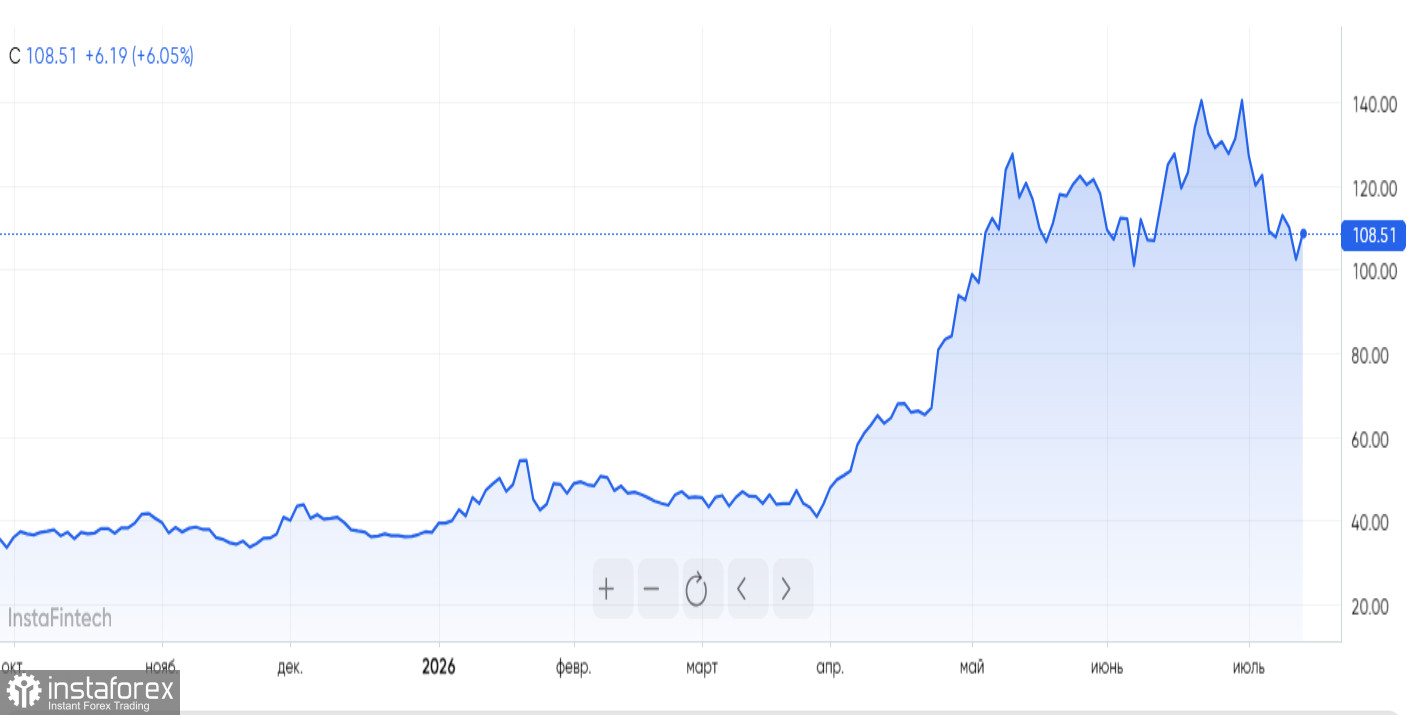
The investment complements a recent deal: in April, Intel reacquired the 49% stake in Fab 34 it had sold in 2024, paying $14.2 billion and regaining full control — a move that generated $3 billion for partner Apollo. Intel CFO David Zinsner said the prior deal provided "significant flexibility," and the company now has a "more resilient balance sheet, improved financial discipline and an updated business strategy."
Intel is thus doubling down on production localization to meet AI-chip demand. Fab 34 remains a key site for advanced nodes and EUV manufacturing in Europe; the financial maneuvers around its share reflect Intel's desire to accelerate strategic plans under full control.

The war of large neural networks is increasingly a race for efficiency. Over the past week, several major players — OpenAI, Meta and Elon Musk's SpaceX AI — announced new model versions that prioritize token-efficiency and lower operational cost over sheer size or speed.
OpenAI introduced GPT-5.6, positioning it as a model capable of solving more tasks while consuming noticeably fewer tokens. SpaceXAI released Grok 4.5, touted as having "twice the token efficiency" of competitors.
In an interview with Bloomberg, Mark Zuckerberg promised Muse Spark 1.1 would be "price attractive," adding that "there is a real opportunity to offer cutting-edge or very high levels of intelligence at a much more affordable price."
Why it matters: corporate clients have begun loudly complaining about rising AI bills. "Companies are spending far more than before," says Gil Luria, head of tech research at DA Davidson. After months of encouraging aggressive internal use of AI — a practice dubbed "token-maxing" — firms are now facing unexpectedly high costs and demanding greater efficiency.
Real-world stories confirm the trend. Gauthier Clouet, head of Paris startup H Company, said he'd seen a monthly bill for one executive that amounted to millions of dollars, prompting internal limits and stricter controls on model usage.
What this means for the market and users: the shift from "the most powerful model" to "the most economical model" could reshuffle market positions. Clients will choose not only by raw performance but also by cost-effectiveness for specific tasks. Providers that offer the best balance of capability and price will win in the corporate segment. For enterprises, it's a prompt to review access rules, usage caps and internal policies to avoid billing "surprises."
The instruments mentioned in this review are tradable on InstaForex, so users may want to open a trading account on the platform and download the company's mobile app.
MobileTrader: trading platform near at hand!
Download and start right now!
You have already liked this post today
*Disclaimer: The market analysis posted here is meant to increase your awareness, but not to give instructions to make a trade.
 If you have any content questions, please contact editorial-board@instaforex.com


