




 09:32 2026-03-13
On November 14, 1963, the world received a rare living experiment — Surtsey. It took its name by analogy with its "father." By its twenty‑fifth birthday, because of its exceptional origin, it was inscribed on UNESCO's World Heritage List. It became the youngest site on that list. The story of Surtsey is not about the past. It is about how life is colonizing new land right now.
 250
250 9
9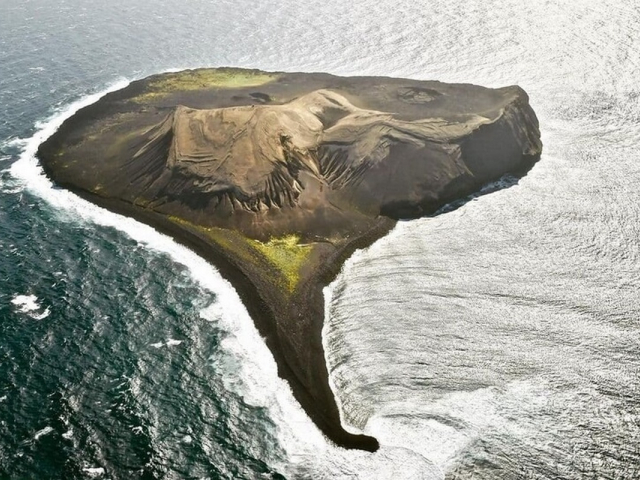



Fire and water came first, but fishermen failed to save anyone
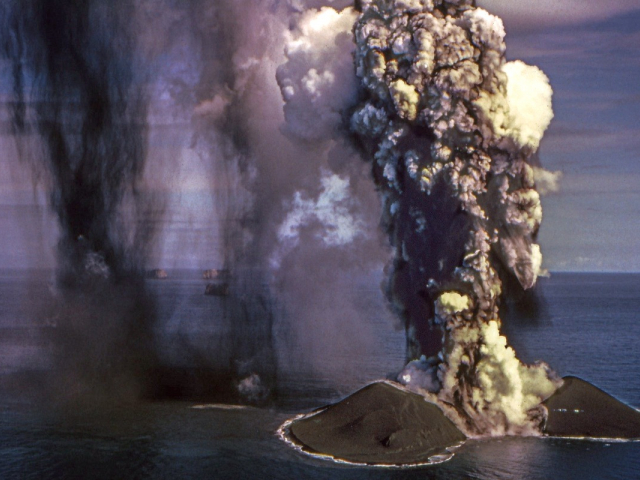
At first, people thought a ship was sinking. When a fishing boat came closer, they discovered that fire was erupting from the ocean. The Earth’s crust split beneath the water, volcanic magma rushed upward, steam explosions began, and volcanic “bombs” flew into the sky. New land formed. Within days, the place became the focus of global attention. Journalists and scientists arrived while the sea around the island boiled with lava flows. Its birth was almost mythic in drama and in importance to science.
For sake of fire and Elvis — between legend and popular humor
The island was named after Surtur, the Norse lord of the fiery giants. Icelanders, however, often jokingly called the newborn “Presley” because its contours reminded them of the rock‑and‑roll king’s hairstyle. The double name reflected both ancient tradition and a folk sense of humor in the face of a natural catastrophe. The fact that days after the eruption the island already had a shape poets and musicians could discuss showed how quickly not only the landscape but also the cultural image of a place can form.
How rule of non‑interference works
To avoid disrupting natural colonization and to keep the experiment pure, scientists succeeded in protecting the island from mass visitation. Researchers allowed on Surtsey follow strict hygiene protocols to avoid introducing foreign seeds or insects. Only short stays are permitted, and there is a single small hut for overnighting. An ecological incident nearly occurred when pieces of tomato from a scientist’s lunch reached the soil. The plants that sprouted were removed promptly without lasting effects on the ecosystem.
Months instead of millions of years— how Surtsey’s relief grew up
Geologists were astonished that bays, cliffs, gullies, and boulders — forms normally attributed to millennia of erosion — appeared on Surtsey in a matter of months. By the end of January 1964, the volcano’s cap had risen to fifty meters. The combination of lava flows eroded by tides and the mechanical breakage of rock produced a surprisingly varied relief. The rapid maturing of Surtsey’s landscape surprised researchers. Where forces are strong, nature can accelerate dramatically.
Rise of Green — from bacteria to trees
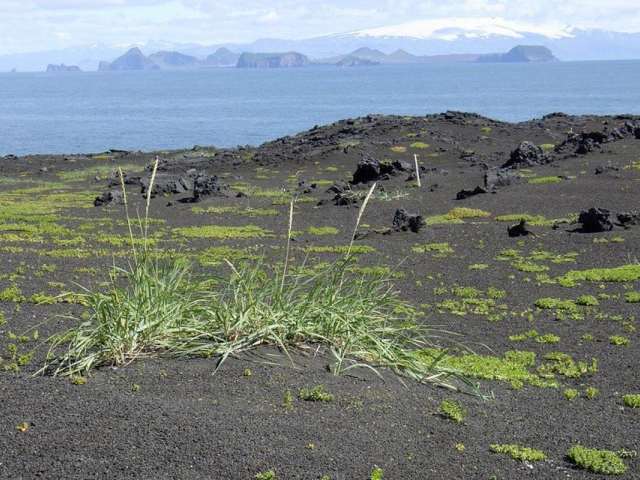
Already in spring 1965 (a few months after Surtsey’s birth), a shoot of sea mustard pushed through the black sand. The brand‑new island was first colonized by microbes and molds. Then, grasses and cereals appeared. Moss arrived in 1967 and lichens in 1970. By the mid‑1980s, more than twenty plant species had established on the island. In 1998, the first shrub, the willow Salix phylicifolia, was recorded. By 2008, about seventy plant species had been documented. Each year, two to five new colonists arrive.
Unexpected cargo — spiders and beetles delivered
The people who first stepped onto the island in 1964 found flies and spiders waiting. Spiders used silk threads to balloon across the sea; beetles and small invertebrates arrived by rafting, caught on floating masses of seaweed. Birds carried seeds, and some organisms used floating vegetation as transport. This natural transfer of species, without human intervention, forced scientists to rethink distant ecological connections, where ocean currents and wind act as couriers for living organisms.
Source of life — how birds turned rock into oasis
Birds became the key agents of Surtsey’s revival. They brought seeds in their stomachs and enriched the soil with droppings rich in nitrogen and phosphorus. By 1970, the island hosted its first chicks. Initially, seabirds and black guillemots settled, building pebble nests and staying close to the cliffs. In autumn 1985, a pair of ground‑nesting birds arrived and made a nest of plants in the lava lowlands. With each season, more of that species came, and Surtsey grew a permanent colony of several hundred pairs.
Extreme for humans — solitary hut at edge of the world
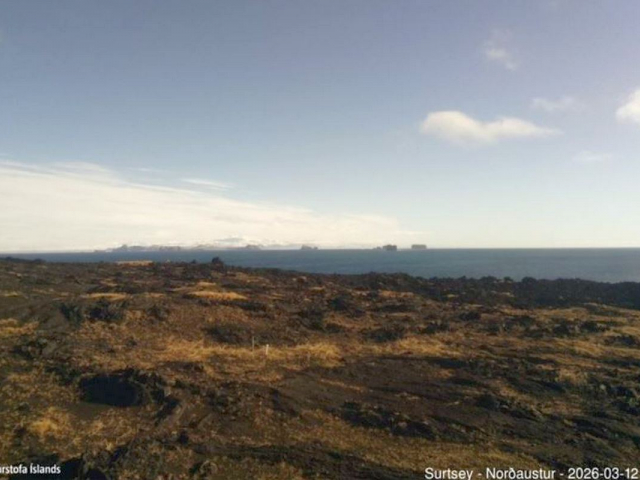
A simple hut stands on the island where only invited researchers may spend the night. Since 2009, a meteorological station has operated there, and surveillance cameras transmit climate changes and the behavior of flora and fauna. Research protocols require sterilizing footwear and strict control of personal items. For scientists, the conditions are extreme, but they receive a rare privilege: to observe an accelerated formation of an ecosystem, document new species, and record how land is being settled without direct human involvement.
Defying predictions — how long will Surtsey endure?
The same ocean that gave Surtsey life is gradually taking it back. Over the decades, the island’s area has decreased by roughly half, although its basaltic core remains more resilient. Geologists disagree: some argue that the ash plains will be washed away entirely within a century. Others believe the island will stabilize. In any case, Surtsey — and its famous “Presley” form — has already given its most valuable gift: a lesson about the importance of sometimes stepping aside and letting nature act on its own. You can also watch the island’s life through the meteorological station’s webcam.


-
Grand Choice
Contest by
InstaForexInstaForex always strives to help you
fulfill your biggest dreams.JOIN CONTEST -
Chancy DepositDeposit your account with $3,000 and get $9000 more!
In May we raffle $9000 within the Chancy Deposit campaign!
Get a chance to win by depositing $3,000 to a trading account. Having fulfilled this condition, you become a campaign participant.JOIN CONTEST -
Trade Wise, Win DeviceTop up your account with at least $500, sign up for the contest, and get a chance to win mobile devices.JOIN CONTEST


